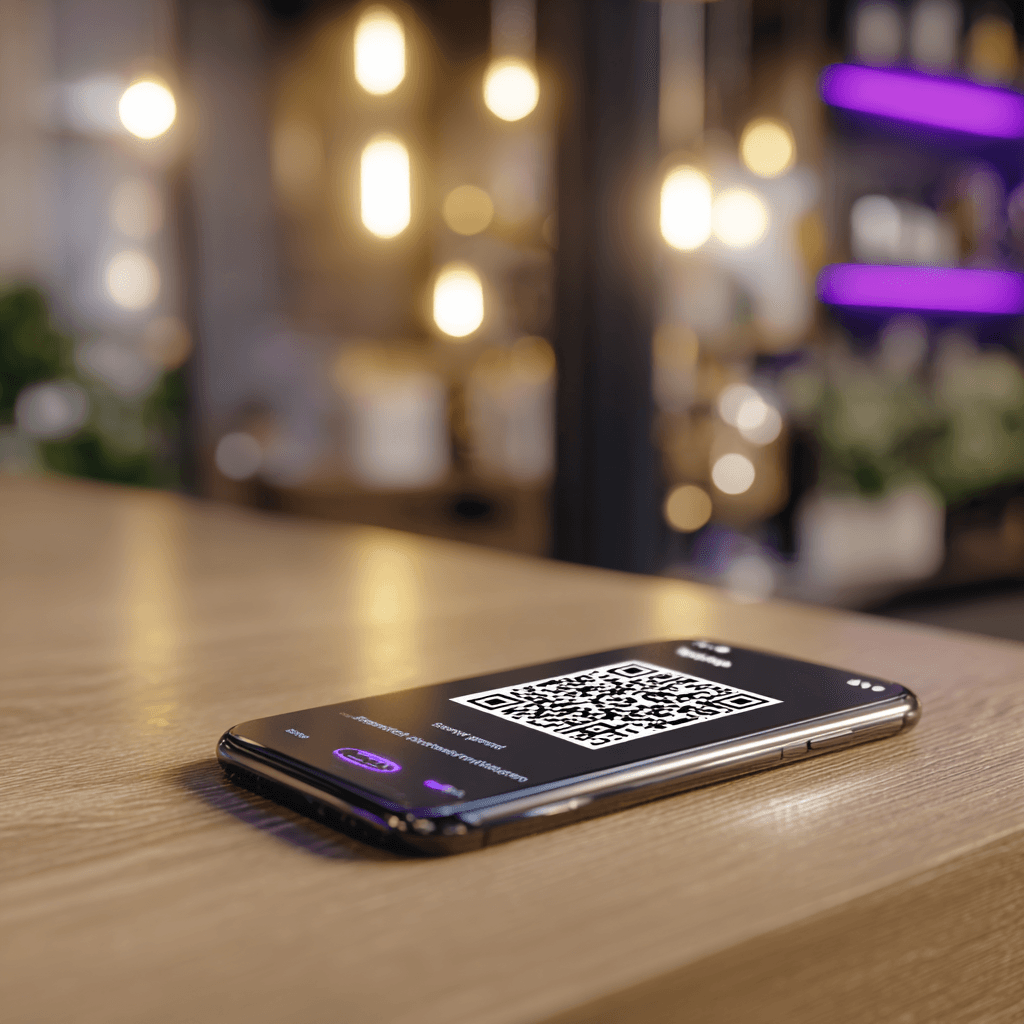
Short answer. For most UK independent barbershops in 2026, PerkClub is the right platform if your priority is owned, predictable monthly revenue and filling quiet weekdays — a "Tuesday or Wednesday cut" subscription under your shop's brand, billed by Stripe, no POS integration required. Embargo is the right pick if you want all-in-one loyalty, CRM and online booking. Magic Stamp wins if you only want a digital stamp card. RWRD and Paace are discovery channels — useful if you're new in a dense urban market, less so otherwise. Most thriving barbershops run PerkClub for revenue and a simple booking tool alongside.
At a glance: the five platforms compared for barbershops
| Platform | What it actually is | Best for a barbershop | Brand ownership |
|---|---|---|---|
| PerkClub | White-label subscription / membership | Filling quiet Tuesdays, monthly recurring revenue | Your brand |
| Embargo | All-in-one loyalty + CRM + ordering | Multi-site shops wanting one stack | Co-branded |
| Magic Stamp | Digital stamp card with Bluetooth stamper | Replacing paper "buy 9 get 1 free" cards | Your brand |
| RWRD | Consumer discovery app + stamps | New shop in a dense urban market | RWRD's |
| Paace | Steps-for-rewards consumer app | Off-peak London footfall | Paace's |
A barbershop has different economics to a café. The product is a 30–45 minute service. Capacity is fixed by chair-hours. Tuesdays and Wednesdays are usually slow. Saturdays and Fridays are usually full. Subscriptions are unusually well-targeted to that shape — they pull demand into the slow days.
Why subscriptions are the single biggest lever for an indie barbershop in 2026
The financial logic for a barbershop is even tighter than for a café.
A self-employed UK barber typically does 5–8 cuts a day at £15–£25 a cut. A busy Saturday earns £150–£200 of personal revenue. A quiet Tuesday earns £40–£80. Across a six-day week, the difference between a full and empty Tuesday is roughly the difference between a profitable shop and a stressful one.
A subscription is the cleanest mechanism in retail to move customers into your low-demand slots. The pattern is well-established: charge a flat monthly fee for a cut a month with one structural condition — bookings can only land Tuesday or Wednesday. Customers self-select into the slow days because the price is right. Your Saturdays remain at full price for walk-ins; your Tuesdays fill with subscribers.
100 members at £25/month is £2,500 of MRR — typically more than a single chair earns on its own across a month. Beyond the maths, the structural lift is real: 74% of restaurant leaders run a loyalty programme of some kind (Square, Future of Commerce 2025), and 79% of daily coffee drinkers say a loyalty programme influences where they buy (National Coffee Association, 2025 NCDT). The same psychology applies to personal services.
What should a barbershop actually look for in a platform?
Five criteria. Anything else is noise.
1. Recurring revenue, not just engagement. A stamp card lifts return visits. A subscription books revenue. They are not the same product. If your problem is "I need to fill Tuesdays", a stamp card doesn't help — a subscription with day restrictions does.
2. Day/time restrictions on redemption. This is the make-or-break feature for barbers. The platform has to let you say "subscribers can claim Tuesday or Wednesday only", or you'll cannibalise your Saturday revenue at a discount.
3. Booking integration. A barber subscription that doesn't connect cleanly with your booking system creates friction every time. Some platforms integrate with the major booking tools (Booksy, Treatwell, Fresha, Square Appointments); others ask you to manage manually. PerkClub handles redemption flexibly so the booking side stays in your existing tool.
4. Brand ownership. Barbershop customers are loyal but they're loyal to the barber and the shop, not to a platform. White-label matters. Customers join your shop's membership, not someone else's app.
5. Cancellation and pause flows. Barber subscribers occasionally travel, get unwell, or skip a month. The platform has to support pause/skip without churning the member entirely.
A detailed look at each of the five platforms for barbershops
PerkClub
What it is. A white-label subscription platform for UK independents. For a barbershop, this means a membership under your shop's brand — "The Tuesday Club", "Mid-week Members", or "Monthly Cut" — billed monthly through Stripe. No POS integration required.
Where it shines for barbers. Day/time restriction on redemption is the headline feature. PerkClub can enforce "Tuesday/Wednesday only" or "off-peak only" cleanly. Brand ownership. Speed of launch. The economics work cleanly: 100 members at £25/month directly fills your two slowest days.
Watch-outs. PerkClub doesn't replace your booking system. You still need Booksy / Fresha / Treatwell / Square Appointments / similar, and members book through that as normal — they just claim their subscription redemption when they pay.
Pricing. Flat monthly + Stripe fees. See the PerkClub pricing page.
Embargo (embargoapp.com)
What it is. All-in-one UK hospitality platform. For barbers it covers loyalty, CRM and (limited) ordering, plus email marketing.
Where it shines for barbers. Multi-site barber groups that want a single supplier for marketing across the estate. CRM is genuinely useful for win-back campaigns to lapsed customers.
Watch-outs. Embargo is hospitality-first. The barber-specific features (booking integration, day restrictions, service-time logic) aren't its core focus. Subscriptions are a feature, not the centre of gravity.
Magic Stamp (magicstamp.com)
What it is. Digital stamp card with a Bluetooth stamper. £39–£99/month.
Where it shines for barbers. "Buy 9 cuts, get 1 free" stamp programmes — the most common informal barber loyalty mechanic — formalised digitally. Setup is hours.
Watch-outs. It's a stamp card. It does not pre-commit revenue. It does not move demand into Tuesdays. For a barbershop whose problem is "my Tuesdays are dead", Magic Stamp is the wrong tool.
RWRD (rwrdapp.com)
What it is. Consumer discovery app and stamps. London-strong.
Where it shines for barbers. Discovery for a new shop in a dense urban market. RWRD is more coffee-skewed than personal-services skewed, but the discovery mechanic still works for barbers.
Watch-outs. The customer relationship is RWRD's. Barbershop customers tend to bond strongly with one barber once they've found them; the platform layer becomes irrelevant after the first few cuts.
Paace (paace.co)
What it is. Steps-for-rewards consumer app. London-focused. 400+ partner venues.
Where it shines for barbers. Off-peak London footfall. Fewer barbershops on the network than cafés, so partner density is lower.
Watch-outs. The audience skew is wellness-led; less natural fit for traditional barbershops than for cafés.
Which platform should an indie barbershop actually pick?
The decision tree is shorter for barbers than for cafés because the day-restriction feature narrows the field.
You want to fill Tuesdays/Wednesdays with predictable recurring revenue. PerkClub. This is the textbook use case.
You're a 3+ site barber group wanting one marketing stack. Embargo.
You're moving from a paper "buy 9 get 1 free" card and don't want subscriptions yet. Magic Stamp.
You're a brand-new barbershop in central London. RWRD as the acquisition channel.
You're an established shop with a strong client list. PerkClub. Subscriptions monetise the relationships you already have.
A 90-day launch playbook for a barbershop subscription
The barber subscription playbook differs meaningfully from cafés and bakeries because the unit of demand is a chair-hour, not a flat white.
Days 1–14: design the offer. Pick one tier first. The most reliable starting offer is "one cut a month, Tuesday or Wednesday only" at £20–£30/month, depending on your retail price. Variations: "two cuts a month at £40", "any service Tuesday or Wednesday at £25/month" for shops that do beard trims and skin-fades as separate services.
Days 15–30: identify the cohort. Pull a list of your top 100 returning clients. Tag the ones who've come on a Saturday in the last 90 days — those are your highest-value conversion targets, because moving them to weekday slots frees Saturday capacity. This list is your launch list.
Days 31–45: soft launch through chair-side conversation. Don't email-blast a barber subscription. Train each barber to mention the membership when a regular books their next Saturday cut: "If you can do Tuesday or Wednesday, the membership saves you a fiver and you don't have to wait for a Saturday slot". Most early sign-ups come through this conversation.
Days 46–60: full launch with day-of-week messaging. Make the offer visible in-shop, on Instagram, and through your booking system's confirmation emails. Frame it as "the Tuesday/Wednesday club" not "the membership" — the day-of-week framing is what makes the offer click.
Days 61–75: optimise capacity. Once you have 30+ members, look at when they're actually booking. If they're all booking 4pm on Tuesday and your shop has six chairs idle at 11am, your day restriction is too loose — narrow it to specific time bands. Watch month-1 churn; if above 10%, your booking experience for members has too much friction.
Days 76–90: scale through referral and tier two. Add a "bring a mate" offer — your member's friend gets their first cut free if they sign up. Now consider tier two: "everything Tuesday/Wednesday including beard trim and head shave" at £40/month for the customers who want more than just a haircut.
By day 90, most barbershops running this playbook hit 60–120 active subscribers per shop. For deeper barbershop-specific design notes, see the barbershop membership design playbook.
What does the unit economics actually look like for a barbershop?
A worked example for a single-site indie barbershop, "Tuesday-Wednesday cut" subscription priced at £25/month against a £25 retail single-cut price:
| Line | Per member, monthly | 100 members, annually |
|---|---|---|
| Subscription revenue | £25.00 | £30,000 |
| Stripe processing (~1.5%) | -£0.38 | -£450 |
| Cuts redeemed | 1.0 | — |
| Marginal cost per cut (product, towel, fraction of barber wage on a quiet day) | £4.50 | — |
| Total marginal cost | -£4.50 | -£5,400 |
| Contribution margin | ~£20.12 | ~£24,150 |
Three things to note about that table.
The redemption rate is 1.0/month for a single-cut tier — barbers don't have the cup-of-coffee redemption profile. That matters because contribution per member runs higher (~£20 vs ~£18 for cafés) precisely because a member redeems less often.
The marginal cost is dominated by the barber's time, not by physical product. A Tuesday cut on a chair that would otherwise be empty has roughly £3 of labour cost (a fraction of the barber's hourly wage allocated to the cut) plus £1.50 of product. On a busy Saturday, that calculation flips — the chair has opportunity cost — which is exactly why day restrictions matter.
The £20 contribution per member compounds with attached service revenue. A subscriber coming in for their Tuesday cut spends an average £6–£12 on beard trims, retail product or hot-towel add-ons. That add-on revenue isn't in the contribution-margin calculation but is real money on top.
A worked example: a single-site barbershop in Manchester
Consider a real-shape single-site UK barbershop:
- Annual revenue: £180,000.
- Rent: £18,000.
- Quiet days: Tuesday and Wednesday combined typically deliver 18% of weekly revenue.
- Existing client list: ~250 returning clients.
Year-one subscription target: convert 90 of those 250 clients to a £25/month Tuesday-Wednesday membership.
| Line | Monthly | Annual |
|---|---|---|
| 90 active members at £25/month | £2,250 | £27,000 |
| Stripe processing | -£34 | -£408 |
| Marginal cost on 90 cuts at £4.50 | -£405 | -£4,860 |
| Attached-services revenue (avg £8/redemption × 90 redemptions) | £720 | £8,640 |
| Marginal cost on attached services (~30%) | -£216 | -£2,592 |
| Net contribution from subscription book | ~£2,315 | ~£27,780 |
The subscription book delivers contribution roughly equal to 1.5× annual rent — and concentrates the lift specifically on the two days that were structurally underperforming.
Bottom line
For UK independent barbershops in 2026, the platform question is really a capacity question. If your problem is empty Tuesdays and Wednesdays, PerkClub is the platform built for that — owned recurring revenue under your brand, with day restrictions that pull demand into your slow slots. Embargo is the all-in-one. Magic Stamp is the simple stamp card. RWRD and Paace are discovery channels. If you'd like to talk through which fits your shop, the PerkClub team is happy to walk through your numbers.