Short answer
Every independent baker asks this question eventually, usually mid-afternoon while staring at a tray of pastries that won't see tomorrow. The honest answer is that "getting more customers" is really three separate problems wearing one apron: getting found by people nearby who don't know you exist, getting chosen in the narrow window before you sell out, and getting people to come back often enough that they stop being customers and start being regulars. Most advice only tackles the first one, and badly.
Here is the full set of levers, roughly in order of return on the effort for a single-site UK bakery — and then the structural change that fixes the problem sitting underneath all of them.
1. Win local search — this is the biggest lever you have
The majority of people who walk into your bakery for the first time found you on their phone, within a mile, in the last hour. They searched "bakery near me" or "fresh bread open now" and tapped one of the first three results on the map. If you are not in that top cluster, you are invisible to the single largest source of new customers an independent has.
The good news: the thing that decides it is mostly free and entirely in your control. Your Google Business Profile is the most important marketing asset you own, ahead of your website and well ahead of Instagram. To get the most out of it:
- Complete every field. Hours, phone, exact category ("Bakery" as primary), attributes (gluten-free options, outdoor seating, takeaway, dog-friendly), and a proper description.
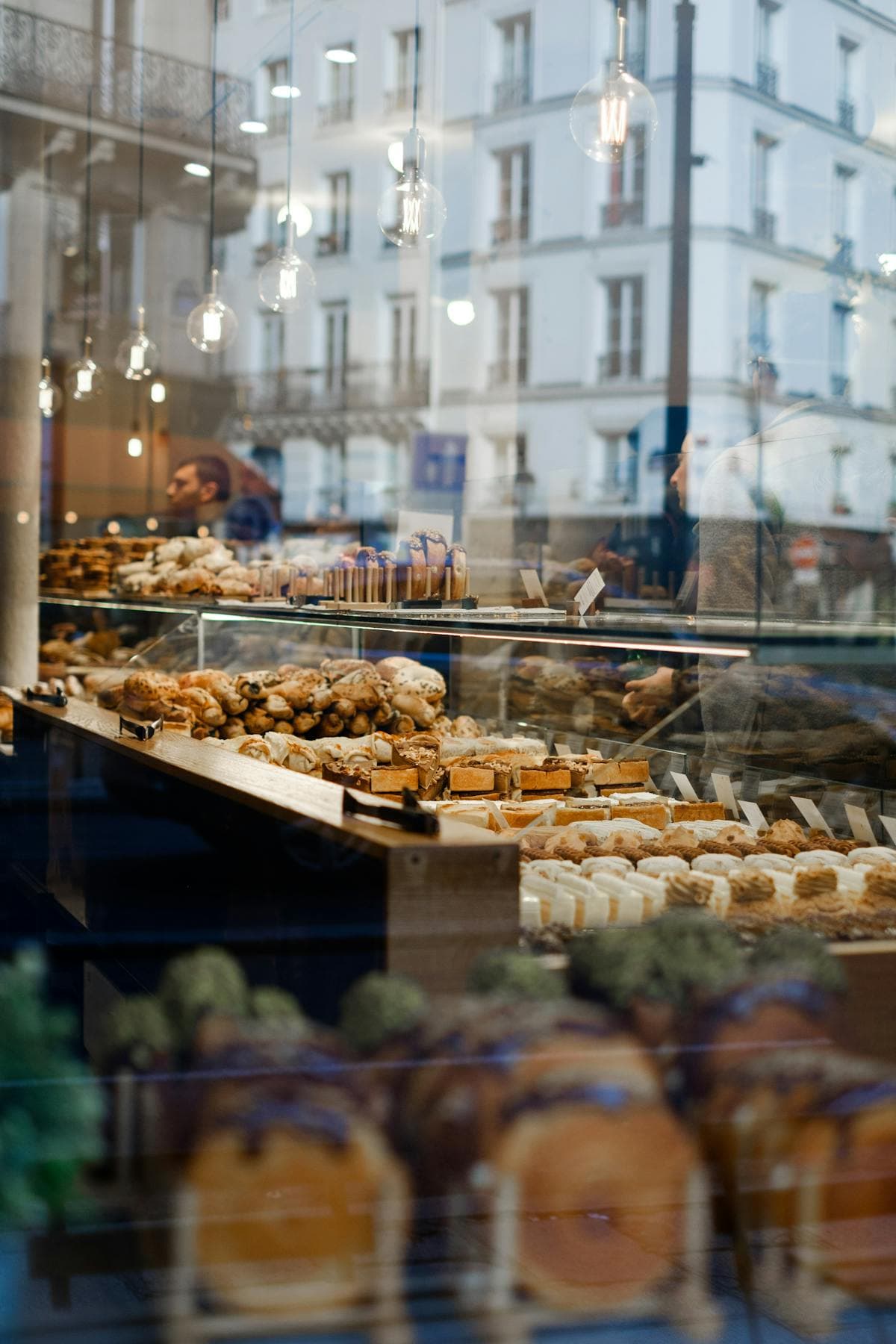
- Add real photos every week. Profiles with fresh, genuine photos earn materially more clicks and direction requests. The morning loaves cooling on the rack, the laminated pastry, the counter at 8am.
- Post updates and offers. Treat the "Posts" section like a free noticeboard — your weekend special, the seasonal range, your bank-holiday hours.
- Keep opening hours ruthlessly accurate, especially over holidays. Nothing kills a first visit faster than a locked door at a time Google promised you were open — and a baker's hours are unusual enough that people genuinely check.
This one lever, done properly, moves footfall within a fortnight. It is the first thing to fix and the cheapest.
2. Treat reviews as the deciding vote
Once someone finds you, your reviews decide whether they choose you. UK consumers read reviews before trying a new local place as a matter of routine, and both the count and the recency matter as much as the average score. A 4.6 with 240 recent reviews beats a 4.9 with 11 from two years ago.
You don't buy reviews, you ask for them — at the moment of maximum goodwill. The customer who just told you "that's the best sourdough I've had in years" is the person to gently point at a QR code on the counter. Reply to every review, the warm ones and the spiky ones; a calm, human reply to a complaint reassures the next reader far more than a flawless average.
3. Win the morning rush — and rescue the end of the day
A bakery has two windows most businesses don't, and both are levers.
The morning rush is when demand is highest and you can sell out. Make it easy to buy fast: a clear, legible price list, the signature products front and centre, and enough hands behind the counter that the queue never becomes the reason someone walks past tomorrow. If you reliably sell out of your best lines by 10am, that's not a triumph — it's demand you turned away. It's the strongest possible argument for pre-orders (below).
The end of the day is the opposite problem: unsold stock heading for the bin. A clearly signed late-afternoon discount, or a listing on a surplus-food app, recovers a little cash and — quietly more valuable — pulls in price-sensitive new faces who might come back at full price. UK food-service waste is a genuine cost, not a rounding error, and every loaf you sell at a discount beats every loaf you throw away.
4. Pre-orders and click-and-collect
This is the lever bakeries underuse most. A simple pre-order — a form, a WhatsApp number, a page on your site — lets a customer reserve the celebration cake, the dozen sourdough for the dinner party, the Christmas order. It guarantees the sale, lets you bake to a known number, and captures the customer's details. Click-and-collect does the same for everyday demand: someone reserves their loaf before the morning rush sells it out from under them. Every pre-order is a sale you've locked in and a number you can plan your bake around.
5. Wholesale supply to local cafés
Footfall isn't your only route to a customer. The café three doors down needs pastries it doesn't want to make, the deli wants a local loaf on its shelf, the gastropub needs bread for the table. A handful of wholesale accounts turns into a steady weekday order that lands whether or not a single person walks through your own door — and it puts your name in front of their customers, some of whom will come find the source. Approach them with a sample box and a price list; it's the cheapest sales call you'll ever make.
6. Farmers' markets, stalls, and sampling
A weekend market stall is a shop window as much as a sales channel: it reaches a crowd that doesn't yet know your bakery exists, and the offcuts plate does the rest. Sampling is unusually powerful for a baker because your product sells itself the moment it's tasted — a tray of torn focaccia or a sliced loaf on the counter converts browsers into buyers faster than any sign. Markets and stalls also feed straight back into levers 1 and 7: every stall is a reason to post, and every new taster is a potential review.
7. Social media — useful, but not the whole job
Instagram and TikTok are real channels, and a bakery has an unfair advantage on them: the product is photogenic and the process is mesmerising. A short reel of dough being scored, laminated layers fanning out, or loaves sliding from the oven travels further than almost anything a café can post. But social is the amplifier, not the engine. A sharp, consistent feed keeps you top of mind for people who already know you and occasionally reaches someone new. Don't let it eat the hours that local search, reviews, and wholesale deserve. Ten good posts a month beats thirty rushed ones.
Signage and seasonal ranges
Two cheap multipliers worth a line each. Signage: a legible A-board with your one hero product and a price stops more passing trade than any algorithm, and an "open / fresh bread now" sign at the right hour converts the undecided. Seasonal ranges: hot cross buns, mince pies, summer fruit tarts, a Halloween bake — these give people a fresh reason to come back and give you something genuinely new to post and pre-sell every few weeks.
The problem underneath all of this
Do all of the above well and you will get more customers through the door. But notice what you've built: a machine that turns effort, weather, and a 5am guess into footfall — where every pound is earned in the moment, a quiet Tuesday is simply a pound that never existed, and every morning you bake to a hope and bin the gap. That double fragility — revenue tied to unpredictable footfall, and product baked to a guess — is the real problem, and it's why "more customers" never quite feels like enough. We worked the numbers on exactly this in the economics of a quiet Tuesday.
The structural fix isn't more footfall. It's converting the footfall you already have into orders you know are coming.
Turn your best customers into members
Your regulars already buy from you most weeks — the Saturday sourdough, the daily pastry on the way to the station. The opportunity most bakeries miss is to let them pay for the habit upfront: a membership that gets them their weekly loaf or daily pastry in exchange for a predictable monthly fee. The structural argument is laid out in full on why memberships.
The maths is what makes it serious. Take a weekly-loaf membership at £24 a month — a loaf every week plus a small members' perk — and sign up 50 regulars who were already coming in. That's £1,200 of recurring revenue every month, landing the same Monday whether it rains or not. But for a bakery the second number matters even more than the first: that's 50 loaves you know to bake before you've opened the doors. You order flour against a confirmed figure, you set the morning's tray count from a real baseline instead of a hopeful one, and the gap between what you bake and what you bin shrinks. The membership fixes the revenue problem and the waste problem in the same stroke.
| Lever | What it does | What it doesn't do |
|---|---|---|
| Footfall (search, reviews, social) | Brings new faces in | Tells you nothing in advance; you still bake to a guess |
| Pre-orders & wholesale | Locks in known orders | Limited to special occasions and trade accounts |
| Weekly-loaf membership | Predictable revenue and a confirmed bake count, every week | Replace footfall entirely — it puts a floor under it |
We show how 100 subscribers can cover an independent's rent in the £30k question, and the broader recurring-revenue case in MRR for high-street businesses.
Memberships also quietly improve every other lever on this page. Members come in more often (they've pre-paid, so they want their value), which lifts footfall and the buzz that draws walk-ins. They're your most loyal advocates, so they leave the reviews and bring the friends. And because they sign up with an email, you finally have a contactable list of your best customers — something a stamp card never gave you. The practical playbook for converting regulars into members is in converting customers to members, the loyalty-specific detail is in improving bakery loyalty, and the platform built specifically for UK bakeries is covered on PerkClub for bakeries.
What to do this week
- Today: complete every field of your Google Business Profile and add five fresh photos of the morning bake.
- This week: put a review QR code on the counter, set up a simple pre-order form, and brief your team to point happy customers at both.
- This month: approach three local cafés or delis with a sample box and a wholesale price list.
- This quarter: pick your signature product, set a weekly-loaf membership price that comfortably beats your cost of goods, and offer it to the twenty regulars you know best.
Footfall gets you through this week. A floor of pre-paid orders is what lets you plan the next one — and bake the right amount when you do.